World Mission Sunday

Cent ans d’histoire au service de l’Évangile
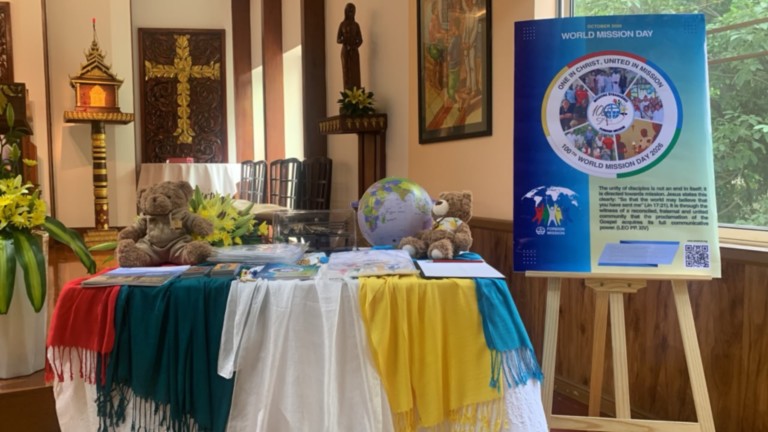
I have very happy memories of World Mission Sunday. I remember the bustle of those days in my parish when I was a child: posters, bulletin boards with photographs of missionaries, rosaries, testimonies. The young people in the youth group were in charge of selling stickers with the World Mission Sunday logo and, during the Masses that weekend, they would take collection boxes through the streets and from house to house so that everyone could contribute to the mission. It was important to support missionaries serving beyond their own borders through our prayers and financial contributions.
For me, this image of missionaries was very powerful: joyful men and women of keen intelligence, immersed in prayer, with almost supernatural gifts for crossing rivers, weathering storms, climbing volcanoes, and always reaching beyond borders to successfully proclaim the Word of the Good News. In my childhood imagination, a missionary was practically a hero, made for success.
Yet how do we measure the success of a mission or an evangelizing endeavor? By the number of conversions? By vocations? By sacramental statistics for baptisms and confirmations? Nothing could be further from the truth. The mission of bringing the joy of the Gospel to the ends of the earth is steeped in stories of apparent failure, defeat, and humiliation, beginning with Jesus’ own preaching. Jesus felt an urgent need to proclaim a paradigm shift, a complete transformation of human history into salvation history: “Today salvation has come to this house” (Lk 19:9).
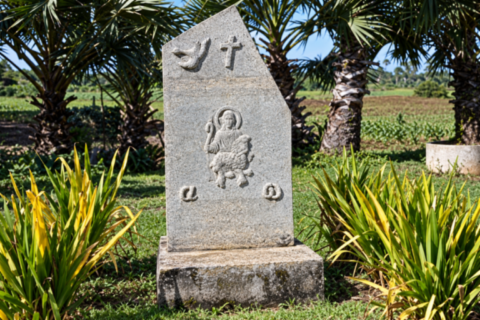
There are stories of apparent missionary failure… such as that of Father Gaspar da Cruz, O.P., in Asia, especially in Cambodia. Gaspar da Cruz was a Portuguese Dominican priest who arrived in the lands of the Khmer Empire around 1555. He considered his few years here a great failure because he did not see the fruits of his preaching. Yet here we are, centuries later, because a seed was scattered. For the Kingdom of Heaven is like a sower who generously scatters his seeds across the fields of the world (cf. Mt 13:3–9). We know the history of the Church in Cambodia well: it nearly disappeared after the war and the genocide under the Khmer Rouge regime. Yet today we see a living Church, with many young people being baptized each year, with Cambodian religious sisters, priests, and pastoral workers; a dynamic and multicultural Church that will soon begin sending its own missionaries.
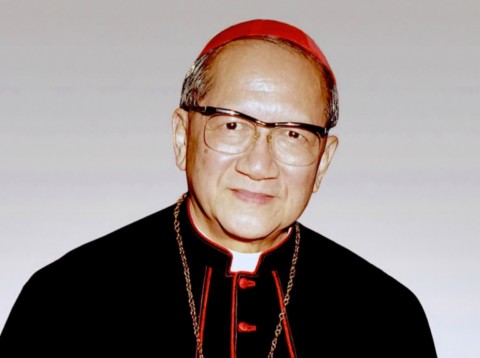
Cardinal François-Xavier Nguyễn Văn Thuận’s story is another account of apparent human defeat. As coadjutor bishop of Saigon, he was arrested after the fall of the city in 1975 and spent 13 years in prison, nine of them in strict solitary confinement. Eventually exiled, he was never able to return to his beloved homeland, Vietnam, and died in exile in Rome in 2002. He now holds the title of Venerable. During his captivity, he wrote passionate messages of faith on the backs of old calendars that children smuggled in. These became the book Five Loaves and Two Fish. It is said that many of his jailers found faith through the bishop’s gentleness, forgiveness, silence, and deep prayer. Despite persecution and restrictions, Vietnam today is a fertile nation with thousands of believers, sending missionaries to distant lands.
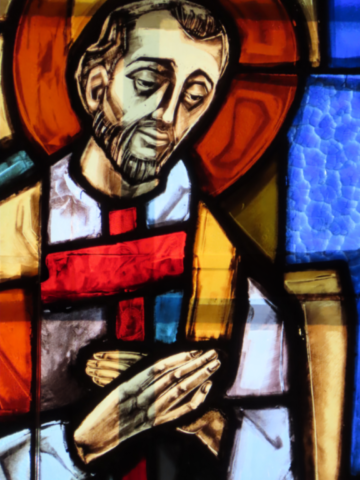
Saint Francis Xavier (1506–1552), the great evangelizer of Asia and co-patron of the missions, visited countless places while enduring extreme hardships. According to the chronicles, he struggled greatly to learn local languages and faced constant frustrations. He died at just 46 on the deserted island of Shangchuan, gazing toward the distant shores of mainland China, the great dream of evangelization he could not fulfill in his lifetime. Yet his passionate letters from India and Japan set the heart of Europe ablaze and continue to inspire thousands to answer the call to give their lives to the ends of the earth.
Saint Francis Xavier let the words of Jesus in today’s Gospel burn in his heart: “Then repay to Caesar what belongs to Caesar and to God what belongs to God” (Mt 22:21). From a missionary perspective, this text takes on a radical urgency:
Caesar stamps his face on metal coins to claim political dominion and earthly tribute.
But God has stamped his own image and likeness on the heart of every human being (cf. Gn 1:27). And it is there, in the heart, that the seed of another possible world must take root.
Giving to God what belongs to God means reclaiming for the Creator the dignity of every human person. The mission does not consist of colonizing or seeking alliances with the powers of this world’s “Caesar,” but of giving back to God what rightfully belongs to him: the life, freedom, and heart of each of his children.
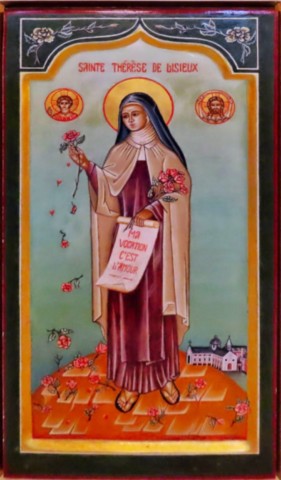
Saint Thérèse of the Child Jesus (1873–1897), universal co-patron of the missions alongside Saint Francis Xavier, died very young, at the age of 24, within the cloister of a Carmelite monastery, without performing extraordinary outward deeds, other than longing to bring the burning love of Christ to the whole world. Her earthly life did not seem like material for a documentary on a streaming service. But God chose to turn everything upside down: “I praise you, Father, Lord of heaven and earth, for although you have hidden these things from the wise and the learned, you have revealed them to the little ones” (Mt 11:25). Her “Little Way”—the spiritual path of childhood and simplicity—was a spark that kindled a blazing fire. “In the heart of the Church, my Mother, I will be Love… and thus I will be everything: Missionary, Doctor, Martyr,” she wrote.
You do not have to be a superhero to be a missionary disciple of the Gospel. What these stories show is that God chooses the weak of the world to shame the strong (cf. 1 Cor 1:27) and reveals his love through our wounds to heal the wounds of the world. For by his wounds we were healed…
As we mark one hundred years since the establishment of World Mission Sunday (1926–2026), we renew our common vocation. Today we are all missionaries, not through any merit of our own, but because we are all one in Christ, united in the same mission of bringing his compassionate and faithful love to every corner of the earth.
* Homily by Fr. Pedro Emilio Ramírez for the English-speaking community in Phnom Penh on World Mission Sunday 2026.
