Learning a Language, Learning to Love

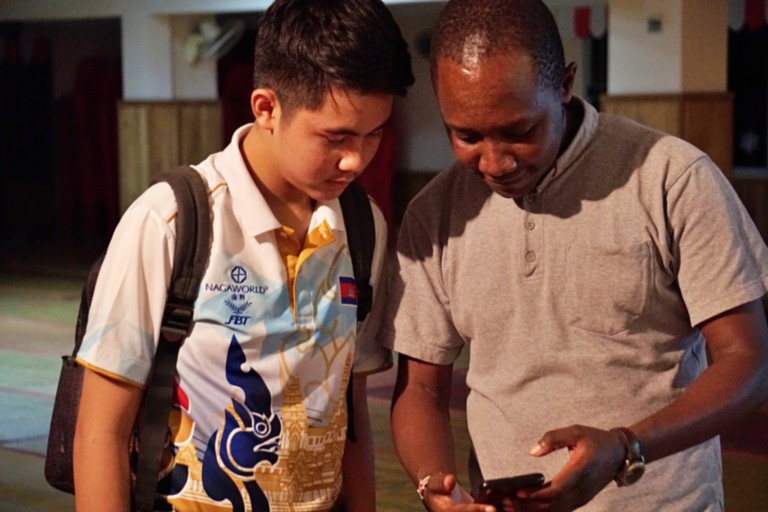
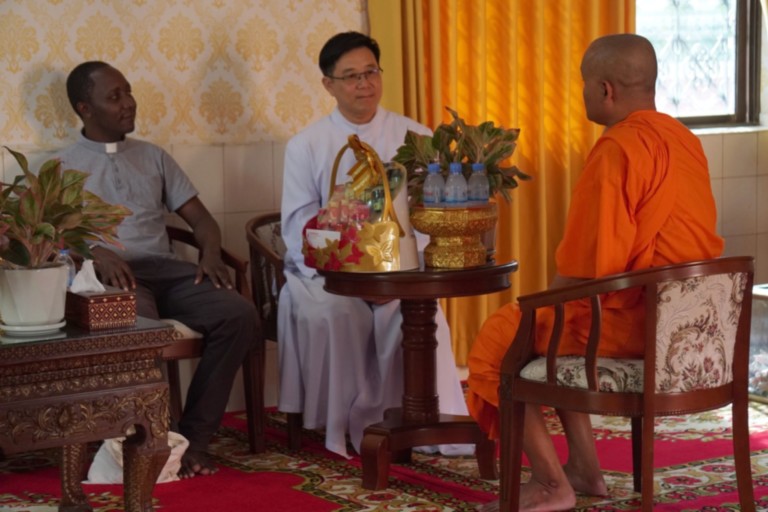
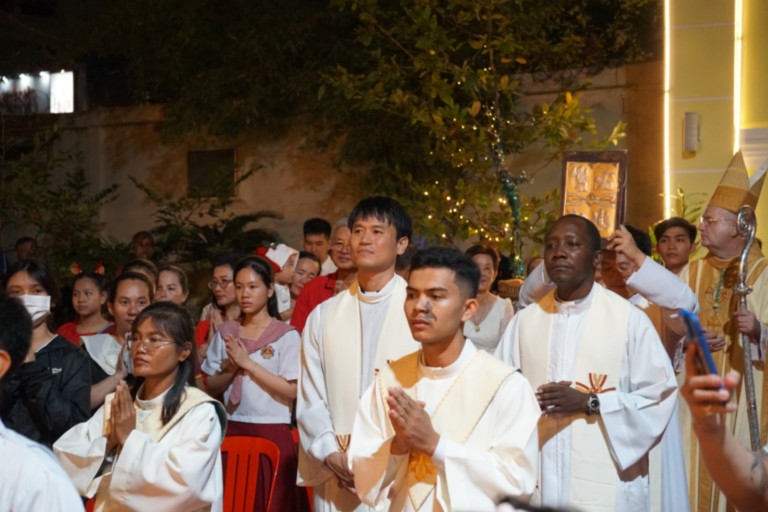
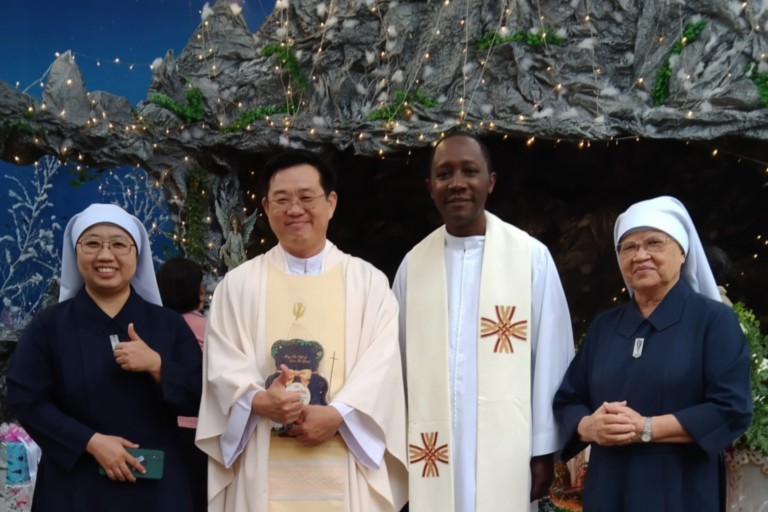
It began as a simple conversation... I asked Fr. Benard Mukeku, a missionary of the SME serving in Cambodia, how was life going and how his Khmer studies were progressing. He smiled before answering. "Learning Khmer," he said, "isn't really about learning words." Then he paused. "It's about learning another way of seeing the world."
Looking back, I realize he was saying something even deeper. Every new language learning begins with an act of love: "Your world matters enough for me to enter it."
To illustrate his point, he gave me an example I was not expecting.
In Khmer, there is more than one way to refer to a Catholic priest.
Most of the time, people address him as lok ou-puk (លោកឪពុក) , a respectful expression that literally evokes the figure of a father. A father figure whose authority is not based on power, but authority born from care, presence and love.
Yet, as he approaches the altar to celebrate the Eucharist, another word is used: bo-chea-char (បូជាចារ្យ) - the one offering the sacrifice.
Initially, I had a question about vocabulary and grammar at the back of my mind. However, I was presented with a new perspective on the ministerial priesthood.
His reflections went further. It seems as though every language bears a secret about what it means to be human. In this case, the Khmer language seemed to reveal a beautiful intuition. Before approaching the altar, he walks the streets. He listens. He visits. He comforts. He learns names. He shares meals. Then, he approaches the altar. His ministry at the altar does not replace his daily life with the community, but rather reveals its deepest meaning.
The more I reflected on our conversation, the more I realized that this insight reaches far beyond ordained ministry. It speaks to every baptized person and, in many ways, to every human being.
Every authentic relationship transforms those who take part in it
Learning a new language transforms the one who learns. It teaches patience, humility and fosters a willingness to become a beginner again. Before speaking, the person must first accept that they need to be taught. Eventually, one discovers that language is not only a means of describing reality but also a way of inhabiting, experiencing and contributing to it.
Perhaps that is one way God's mission unfolds. Perhaps this is what it means to meet another person.
Learning a language asks for patience. It asks for the humility to become a beginner again. Every mispronounced word becomes an invitation to laugh. Every correction becomes an act of trust. Fluency begins long before achieving perfect pronunciation. It begins with the decision to love someone enough to enter their world.
This also helped me see the Eucharist differently
The liturgy does not interrupt ordinary life; it celebrates and reveals the deepest meaning of a life offered in love. The priest who spends a lot of his time learning, listening, encouraging and accompanying others is the same person bo-chea-char (បូជាចារ្យ) who approaches the altar to offer the sacrifice. The priest does not approach the altar empty-handed. He carries faces. Conversations. Joys. Wounds. Names that have become prayers. None of these remain outside the Eucharist. They are entrusted to The Father through Christ. They return as bread broken for the life of the world.
This same movement continues beyond the church doors. The Eucharist does not end with the dismissal. It continues wherever people choose to make their lives an offering of love.
Whenever an act is born of genuine love, it never ends with itself
Those genuine acts of love transform both the giver and the receiver and quietly, help to transform the world.. Every gesture of care, every attentive conversation and every sincere effort to enter another person's world becomes part of God's patient work of building communion with all the creation.
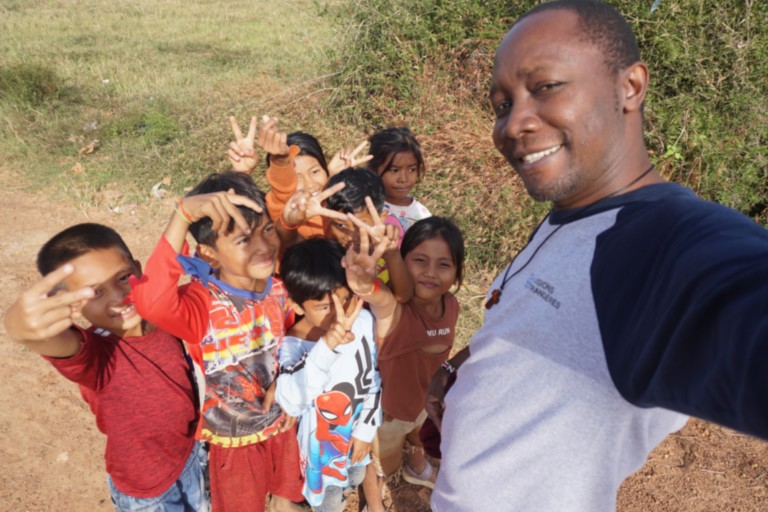
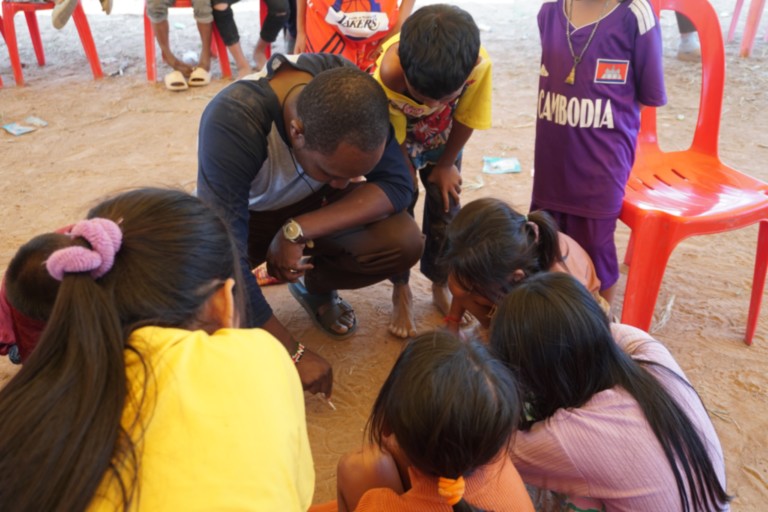
I can imagine a missionary repeating the same foreign language word again and again, getting it wrong more than once. I can picture a child smiling and gently correcting him or her. Little by little, the word ceases to be a mere sound and becomes a relationship.
Perhaps the Kingdom grows in the same way. The learner repeats a word. A child smiles. Both leave the conversation changed. Love has already translated what language could not.
Perhaps that is what mission has always been: learning another person's language until, little by little, both parties discover that love has already become their common language.